

Lifesaving
Qualified lifeguards and patrolling members help keep Ocean Beach safe.
Ocean Beach in Denmark is patrolled by qualified lifeguards for 4 months of the year, from December through March. During the summer holidays SLSWA affiliated lifeguards watch the beach from Monday morning until Saturday afternoon.
Local community volunteer lifesavers are on hand for Saturday afternoons, Sundays and for public holidays throughout the summer holidays as well as weekends outside the holiday period.
To see when Ocean Beach is patrolled over summer, check out this calendar or download this app.
Are you a patrolling member at Denmark SLSC?
Check out your patrol group and the dates you’re on patrol below.

Lifeguards on the beach wear this uniform
In WA, SLSWA is the largest provider of paid lifeguard services, managed under contract for local or state government agencies.
SLSWA Lifeguards wear black, red and yellow uniforms with LIFEGUARD written clearly on the back and front of the shirt.
In Australia, many local councils also run their own professional ocean lifeguard service. These lifeguards wear a range of different coloured uniforms, including variations of blue, white, red and yellow.

Lifesavers wear this uniform
Since it’s humble beginnings in 1909, volunteer lifesavers have saved more than 600,000 lives.
Today, in WA alone, more than 5000 trained volunteer surf lifesavers commit their weekends and public holidays to patrol our coastline and keep beachgoers safe. This accounts for more than 100,000 hours a year. It’s easy to see how our people know the beach best!
Lifesavers wear easily identified red and yellow uniforms with SURF RESCUE clearly written on the front and back of the shirt.
What should I do if I need help from a lifesaver?
If you are in the water and need help, you should raise your arm and wave it above your head. This is the universal signal for help.
If you are on land and see someone who may need help in the water, or have any emergency, you should immediately call TRIPLE ZERO emergency. Emergency services will then respond as quickly as possible.
Remember, the safest place to swim on the beach is between the flags.
What equipment do Lifesavers use?
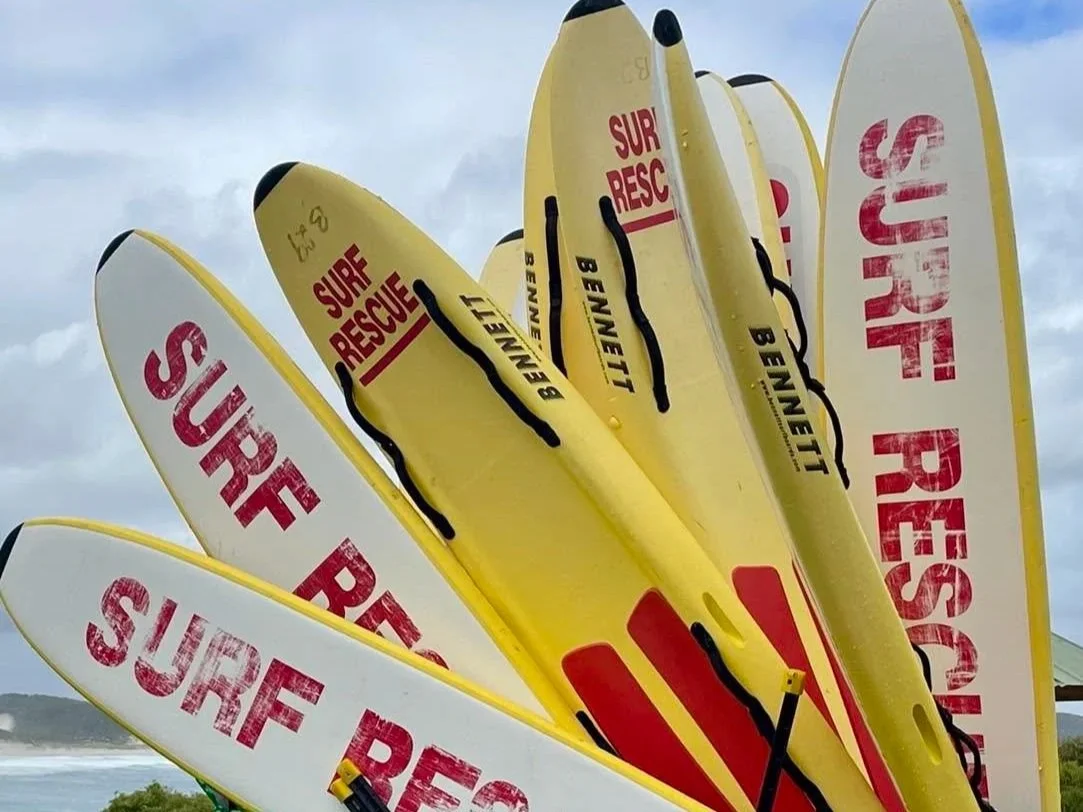
Surf lifesavers and lifeguards use specialised equipment to reach people in distress as quickly as possible.
All Terrain Vehicles (ATVs)
Like a quad bike, ATVs help lifesavers get where they need to be with their rescue equipment as quickly as possible.
The rescue tube
A simple flotation device which can be dragged behind the lifesavers as they swim towards the patient. They provide additional buoyancy to the patient who can then be dragged back to shore, or assisted by a rescue board or rescue boat.
The rescue board
A fast simple way of getting to people in the surf. Patients can be loaded onto a board and returned to shore, or simply hold on until a rescue boat or craft can assist.
The Inflatable Rescue Boat (IRB)
IRB’s have become workhorses for lifesaver over the last 40 years. They are fast, agile and can rescue multiple patients in testing conditions.
Rescue Water Craft (RWC)
Commonly known as jet-skis, RWCs offer many of the advantages of the IRB, but can be used by a single lifesaver.
Shark Activity
This website shows information about shark sightings and detections of tagged sharks by the network of monitoring stations. The site also shows the locations of Beach Emergency Numbers – if you need the emergency services at the beach, please use the BEN reference so that help can come directly to you.